
Microneedling for Acne Scars: How It Works and What Results Can You Expect?
 "Microneedling for Acne Scars: How It Works and What Results Can You Expect?")
Acne can clear while leaving behind changes that last much longer than the breakout itself. Some people develop flat red or brown marks, while others are left with indentations or raised areas that change the texture of the skin.
These concerns are frequently grouped together as “acne scars,” but they are not all the same. A treatment that helps one type of scar may have little effect on another.
Microneedling is a professional skin rejuvenation treatment commonly used for certain depressed acne scars. The treatment creates controlled microchannels in the skin, initiating a healing response that includes the production of collagen and elastin.
As the skin remodels, some acne scars may become shallower and less noticeable. Texture may appear smoother and the transitions between scarred and surrounding skin can become softer.
Microneedling does not erase every acne scar, and it is rarely a one-session solution. Results depend on the type, depth and number of scars, the condition of the skin and the treatment plan.
Understanding these variables is the first step toward realistic expectations.
What Causes Acne Scars?
Acne scars develop when inflammation damages the skin deeply enough to disrupt its normal healing process.
Mild surface blemishes may heal without permanent textural changes. Deep inflammatory acne, including nodules and cysts, carries a greater risk because inflammation extends farther into the skin and can damage collagen-rich tissue.
As an acne lesion heals, the body attempts to repair this damage. A scar may form if it produces too little or too much collagen.
When too little collagen is produced, the skin can heal with a depression or indentation. These are known as atrophic acne scars.
When the body produces excess collagen, a raised scar may form. These are called hypertrophic scars or, in some cases, keloids.
Picking, squeezing or scratching acne can increase inflammation and damage, making scarring more likely. However, someone can develop scars even if they never pick their skin, particularly when acne is severe or persists without effective treatment.
Controlling active acne is therefore an important part of scar prevention. Treating old scars while new inflammatory lesions continue to form may lead to a cycle in which new scars appear during the treatment process.
Acne Marks and Acne Scars Are Different
Flat discolouration after a breakout is often called an acne scar, but it may actually be a post-inflammatory mark.
Post-inflammatory hyperpigmentation appears as flat brown, grey or bluish discolouration. Post-inflammatory erythema appears red or pink. These marks can persist for months, but they do not create a depression or raised area in the skin.
A true acne scar changes the skin’s texture or structure.
This distinction matters because microneedling is primarily used to remodel texture. It may sometimes contribute to a more even overall appearance, but a client whose main concern is pigmentation or redness may need a treatment directed more specifically toward colour.
A professional skin assessment can identify whether the concern involves:
- Depressed acne scars
- Raised scars or keloids
- Post-inflammatory hyperpigmentation
- Persistent redness
- Enlarged pores or uneven texture
- A combination of these concerns
Treatment should be selected after this distinction is made, not simply because every mark followed an acne breakout.
What Types of Acne Scars Are There?
Depressed acne scars are generally described as ice pick, boxcar or rolling scars. Many people have more than one type.
Rolling Scars
Rolling scars create broad, shallow depressions with sloping edges. When several appear together, they can give the skin a wavy or uneven texture.
These scars may be attached to deeper tissue by fibrous bands. Microneedling can help stimulate collagen and soften their appearance, but scars that are strongly tethered may require another procedure, such as subcision, as part of a broader treatment plan.
Boxcar Scars
Boxcar scars are round or oval depressions with more defined edges. They may be shallow or deep.
Shallower boxcar scars may respond more favourably to microneedling than deep, sharply edged scars. Deeper scars can require combination treatment to achieve a meaningful improvement.
Ice Pick Scars
Ice pick scars are narrow at the surface but extend deeply into the skin. They can look like small punctures.
Because these scars are deep and narrow, microneedling alone may not adequately remodel their full depth. Other procedures may be considered depending on the scars and the provider’s scope of treatment.
Hypertrophic and Keloid Scars
Raised scars develop when the body produces excess collagen during healing.
Microneedling is intended to stimulate a controlled collagen response, so it is not automatically appropriate for raised scars or people prone to keloids. These scars require a different assessment and treatment approach.
The American Academy of Dermatology emphasizes that effective scar treatment depends on identifying the scar types present. A plan for rolling scars may differ considerably from one created for ice pick or raised scars.
What Is Microneedling?
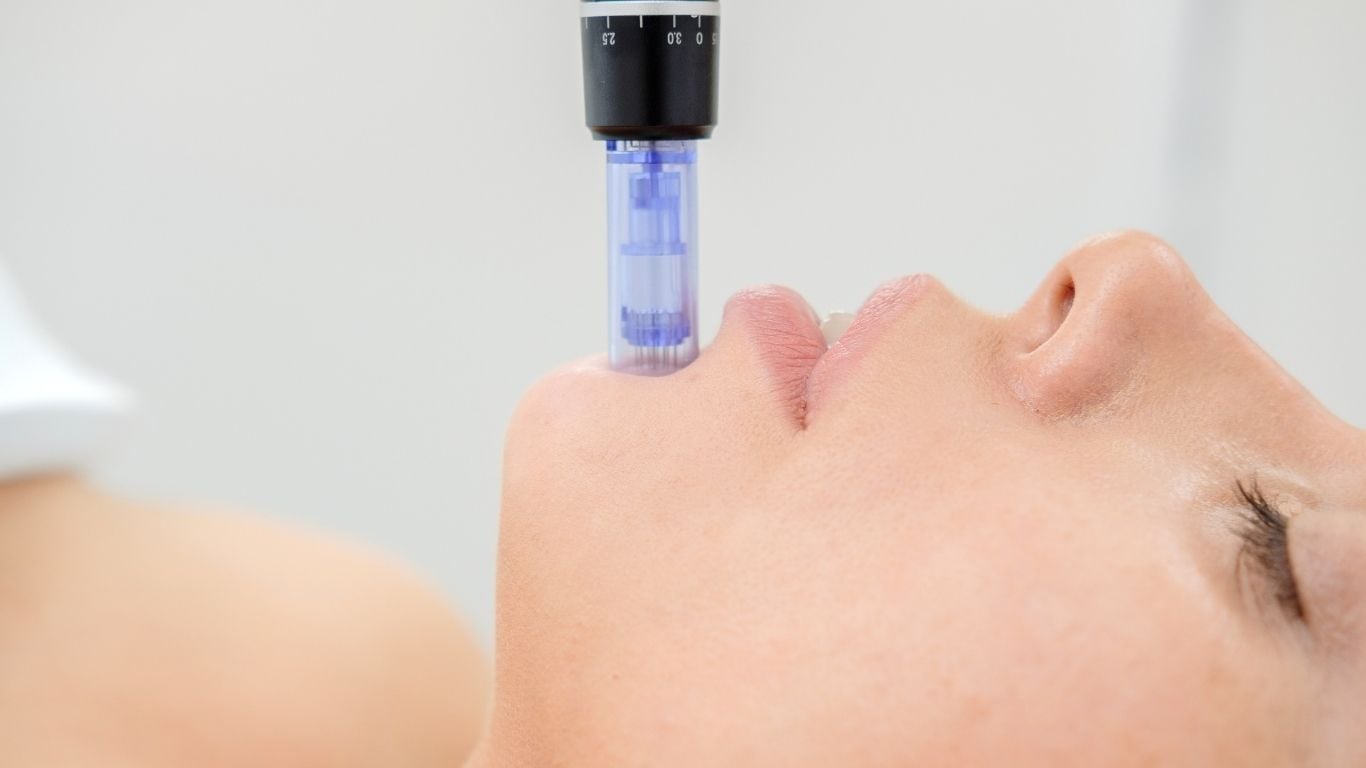
Microneedling is a minimally invasive procedure that uses a device equipped with fine, sterile needles.
The needles move into the skin at controlled depths, creating microscopic channels without removing broad areas of the skin’s surface. This controlled injury signals the body to begin a healing response.
Microneedling is also called collagen induction therapy because collagen remodelling is central to how it works.
Professional devices allow the provider to adjust the treatment according to the area, skin condition and intended goal. Scar tissue may require a different depth or technique than a superficial treatment for general texture.
This precision is one of the reasons professional microneedling should not be equated with an at-home dermaroller.
How Does Microneedling Improve Acne Scars?
Atrophic acne scars form when the skin has insufficient collagen support following inflammation and healing. Microneedling attempts to encourage remodelling within this damaged tissue.
The treatment can be understood in three overlapping stages.
The Controlled Treatment Response
The device creates tiny, controlled channels in the scarred skin. These micro-injuries are deliberate and performed at an appropriate depth under sanitary conditions.
The objective is not to damage the skin as aggressively as possible. Excessive pressure, depth or treatment frequency can increase the risk of irritation, pigmentation changes and scarring.
The Early Healing Phase
After treatment, the skin begins a healing response. Cellular activity increases and the body starts repairing the microscopic channels.
Temporary redness, warmth and swelling are outward signs of this response. These effects do not represent the final result.
Collagen Remodelling
Over the following weeks and months, collagen and elastin develop and reorganize within the treated tissue.
As this remodelling occurs, depressed scars may gradually become less deep. Their edges can appear softer, and the overall skin surface may look smoother.
Because the improvement depends on a biological process, results are gradual. A person may notice early changes within several weeks, but collagen remodelling continues well beyond the initial recovery period.
Which Acne Scars Respond Best to Microneedling?
Microneedling is generally used for atrophic or depressed acne scars.
Rolling scars and shallow boxcar scars may respond more favourably because the treatment can stimulate collagen across the base and edges of these depressions.
Deep boxcar scars and ice pick scars may be less responsive to microneedling alone. This does not necessarily mean that microneedling has no role, but another treatment may be needed to address the depth or shape of the individual scars.
The outcome also depends on whether scars are tethered to deeper tissue. A rolling scar held down by a fibrous band may not lift adequately through collagen stimulation alone.
The number of scars, their location and the thickness of the surrounding skin also affect the plan.
This is why before-and-after photographs from another client cannot predict your result. Two people may both describe their concern as “acne scarring” while having entirely different scar patterns.
Can Microneedling Remove Acne Scars Completely?
No professional treatment should promise to completely erase acne scars.
Microneedling can make suitable scars less noticeable by improving their depth, edges and surrounding texture. It does not return the skin to an untouched state or guarantee that every scar will respond equally.
A realistic goal may be smoother texture, shallower depressions and scars that catch less light or create fewer shadows.
Some scars may improve substantially, while others remain visible. A mixed pattern may require multiple techniques because each scar type responds differently.
The phrase “acne scar removal” is commonly searched online, but “acne scar improvement” is usually a more accurate description of what treatment can achieve.
How Many Microneedling Treatments Are Needed?
Acne scars typically require a series of microneedling treatments.
The American Academy of Dermatology notes that some acne-scar plans involve approximately three to five sessions, often spaced several weeks apart. This is a general example rather than a fixed prescription.
The number recommended for you may depend on:
- The type and depth of the scars
- The number and location of scars
- Your skin’s response to treatment
- The microneedling device and settings
- Whether another treatment is combined with microneedling
- Your tolerance for downtime
- The improvement you hope to achieve
Sessions are spaced apart to allow the skin to heal and begin remodelling. Performing treatments too frequently does not force the body to create collagen faster and may interfere with recovery.
Progress should be assessed through consistent photographs and professional evaluation rather than day-to-day inspection in changing light.
When Will You See Microneedling Results?
Some people notice that their skin looks smoother or brighter after the initial recovery period. However, this early change should not be confused with completed acne-scar remodelling.
New collagen develops gradually. Improvements in scar depth and texture may become more visible several weeks after treatment and continue developing over the following months.
When treatments are performed as a series, the collagen response from one session may still be progressing when the next appointment occurs.
The final result is therefore usually evaluated after the series has been completed and the skin has had adequate time to remodel.
Factors affecting the rate and extent of improvement include age, scar severity, healing response, sun exposure, smoking, skincare habits and adherence to aftercare.
What Happens During a Microneedling Appointment?
The appointment begins with an assessment and thorough cleansing of the skin. Baseline photographs may be taken to document the appearance of the scars.
A topical numbing cream may be applied and left on the skin for a period of time to improve comfort. Once the skin is prepared, the provider passes the microneedling device across the treatment area using settings selected for your skin and concerns.
Scarred areas may be treated differently from surrounding skin. The provider must balance the need to stimulate remodelling with the importance of avoiding unnecessary trauma.
The skin will often look red immediately afterward. Pinpoint bleeding may occur with some treatment depths, but aggressive bleeding is not the objective or a sign that a treatment will produce better results.
Once the procedure is complete, appropriate post-treatment products may be applied. You should receive instructions explaining how to cleanse, moisturize and protect your skin as it heals.
Is Microneedling Painful?
A topical anesthetic is commonly used to reduce discomfort.
During treatment, clients may feel pressure, vibration, scratching or prickling. Areas where the skin is thinner or closer to bone may feel more sensitive.
Afterward, the skin may feel warm, tight or similar to a mild sunburn. These sensations generally ease as the early inflammatory response settles.
Pain tolerance varies. If you are anxious about discomfort, discuss it during the consultation rather than waiting until treatment begins.
Severe or worsening pain after the appointment is not an expected response and should be reported to the clinic.
What Is the Downtime?
Microneedling has less downtime than some aggressive resurfacing procedures, but the skin will not necessarily look normal immediately afterward.
Common temporary effects include:
- Redness or a darker appearance in the treated skin
- Warmth
- Mild swelling
- Tightness
- Tenderness
- Dryness or light flaking
These reactions often improve over several days, although the length of recovery varies with treatment intensity and individual sensitivity.
The American Academy of Dermatology advises that redness, colour changes, burning or swelling may persist from a few days to approximately one week in some people.
Plan the appointment with enough time before important events. Scheduling an acne-scar treatment the day before photographs, travel or a special occasion may create unnecessary stress.
What Should You Do After Microneedling?
Aftercare protects the healing skin and helps reduce avoidable side effects.
Use only the products recommended by your provider. The temporary microchannels created during treatment can increase skin sensitivity, so this is not the time to experiment with strong active ingredients.
General instructions may include using a gentle cleanser, applying an approved moisturizer and protecting the skin from sun exposure. Retinoids, exfoliating acids, scrubs and certain acne products may need to be paused temporarily.
Avoid picking at flaking skin. Picking can prolong inflammation and increase the risk of discolouration or scarring.
Your provider may also ask you to postpone strenuous exercise, swimming, saunas or other activities involving heat, sweat or potential contamination.
The timing for restarting makeup and regular skincare should come from the treating clinic because recommendations can vary with the procedure and products used.
Why Is Sunscreen Important After Treatment?
Recently treated skin is more vulnerable to irritation and pigmentation changes.
Sun exposure during healing can contribute to post-inflammatory hyperpigmentation and make the skin appear uneven. Consistent sunscreen use also helps protect existing collagen from ultraviolet damage.
Use the type of broad-spectrum sunscreen recommended by your provider and follow instructions about when it can be applied after treatment. Hats and shade provide useful additional protection.
Sun protection should continue after the skin has healed. Collagen remodelling takes place over months, and repeated UV exposure works against the long-term goal of improving skin quality.
Can Microneedling Treat Active Acne?
Scar treatment is generally planned after inflammatory acne is controlled.
Microneedling over painful, pus-filled or deeply inflamed lesions can increase irritation and potentially spread bacteria. Continuing breakouts can also create new scars while older ones are being treated.
If you still experience active acne, the priority may be to establish a plan that reduces inflammation and prevents additional scarring.
This does not mean every small blemish automatically disqualifies someone from treatment. The provider must examine the skin and decide whether the procedure should proceed, be modified or be postponed.
If acne is severe, cystic or difficult to control, assessment and treatment from a physician or dermatologist may be appropriate before cosmetic scar procedures begin.
Is Microneedling Safe for Darker Skin Tones?
Microneedling does not depend on targeting pigment with heat or light. For this reason, it can be used across a wide range of skin tones and may carry a lower risk of certain pigment-related complications than some energy-based treatments.
However, “suitable for all skin tones” does not mean risk-free.
Any procedure that creates inflammation can potentially trigger post-inflammatory hyperpigmentation, especially in skin that is prone to discolouration. Treatment intensity, preparation, aftercare and sun protection remain important.
The provider should assess your skin tone, history of pigmentation changes and current skincare routine before creating a plan.
Who Should Avoid or Postpone Microneedling?
Microneedling may not be appropriate when the skin cannot heal normally or when treatment could spread infection or worsen inflammation.
Treatment may need to be avoided or postponed for people with:
- Active skin infection in the treatment area
- Painful, deep or pus-filled acne lesions
- Open wounds or sunburn
- A recent tan or significant sun exposure
- A history of keloid scarring
- Impaired wound healing
- Certain immune conditions
- Treatment affecting immune function
- Skin cancer or radiation treatment in the area
- Recent or current use of certain acne medications
Medication guidance, including recommendations related to isotretinoin, must be individualized. Do not stop a prescribed medication in preparation for microneedling without consulting the professional who prescribed it.
Pregnancy, breastfeeding, cold-sore history, bleeding concerns and other health factors should also be disclosed during the consultation.
What Are the Risks of Microneedling?
Temporary redness, swelling, tenderness and dryness are expected possibilities. Less common complications can include prolonged irritation, infection, acne flare, persistent discolouration and scarring.
Risk increases when treatment is performed too deeply, too frequently, with poor sanitation or by someone who lacks appropriate training.
There is also a risk when unsuitable products are introduced into freshly treated skin. Products designed for normal topical use are not necessarily sterile or appropriate for application over open microchannels.
Contact the clinic if you experience worsening pain, spreading redness, pus, blistering, fever, significant swelling or symptoms that do not follow the recovery pattern explained by your provider.
Professional Microneedling vs. At-Home Dermarolling
At-home rollers do not provide the same treatment as professional microneedling.
Professional devices offer controlled, adjustable depths and use sterile, single-use needle components. The provider can assess scar type, modify settings across the face and monitor how the skin responds.
At-home devices may be too superficial to remodel established acne scars. If they penetrate the skin, poor technique or sanitation can cause infection, irritation, pigment changes or additional scarring.
They may also spread bacteria, cold sores or warts across the skin.
The American Academy of Dermatology warns that overuse and excessive pressure with at-home microneedling products can damage the skin.
Acne scars are already the result of altered wound healing. Creating uncontrolled injuries at home is not a safe shortcut to professional collagen induction therapy.
Can Microneedling Be Combined with Other Treatments?
Combination treatment may be helpful when someone has multiple scar types or concerns that respond through different mechanisms.
Depending on the person and the services available, acne-scar plans may include chemical peels, radiofrequency procedures, laser resurfacing, platelet-rich plasma, fillers, subcision or targeted procedures for deep scars.
Microneedling may help with broader texture while another procedure addresses individual tethered or deep scars.
Treatments should not be combined simply to make a session seem more intensive. The provider must consider whether combining procedures increases irritation or recovery demands and whether each addition is supported by the client’s scar pattern.
Some services are better performed in separate stages. Treating conservatively, allowing the skin to heal and reassessing the result can produce a safer and more purposeful plan.
How Does Microneedling Compare with a Chemical Peel?
Microneedling and chemical peels both initiate skin renewal, but they do so differently.
Microneedling creates controlled channels that stimulate collagen remodelling within the skin. Chemical peels use an applied solution to remove layers of the skin at a depth determined by the peel.
Microneedling may be selected when depressed texture is the primary concern. A chemical peel may be considered for concerns involving surface texture, pigmentation or a combination of mild scars and discolouration.
Neither is automatically better. The appropriate choice depends on scar type, skin tone, downtime tolerance and the depth of treatment required.
How Does Microneedling Compare with Laser Treatment?
Laser resurfacing uses focused energy to create a controlled treatment response. Some lasers remove portions of the skin’s surface, while non-ablative technologies work more deeply without fully removing the outer layer.
Laser treatment can be effective for acne scars, but the choice of technology and settings must account for skin tone, scar type and the risk of pigmentation changes.
Traditional microneedling creates mechanical channels without laser energy or heat. It may involve less downtime than some resurfacing lasers, but a series of treatments is often required.
The better option depends on the scars. Some people may benefit from microneedling, others from laser treatment and some from a staged combination plan.
How Can You Support Your Results?
Microneedling initiates collagen remodelling, but everyday habits can influence the health and appearance of the skin.
Helpful steps include consistent sun protection, avoiding smoking, using appropriate skincare and keeping active acne controlled.
Avoid overloading the skin with exfoliants in an attempt to speed up improvement. Scar remodelling occurs beneath the surface and cannot be rushed through aggressive home care.
Maintenance treatment may be recommended depending on your skin, goals and the way it changes over time. Acne scars do not usually return after being improved, but new acne can create new scars, and natural collagen loss continues with age.
Microneedling for Acne Scars in St. Albert
Microneedling can be a valuable treatment for appropriate depressed acne scars, particularly rolling scars and some shallow boxcar scars.
Its purpose is not to cover scars or temporarily plump the skin. It encourages a controlled healing response so that new collagen can gradually improve the structure and texture of scarred areas.
Results take time and usually require multiple sessions. Deep ice pick scars, tethered rolling scars and raised scars may require a different or combined approach.
Enhanced Medical Aesthetics provides professional microneedling treatments in St. Albert following an individualized skin assessment. The condition of your skin, types of scars and expectations are considered before treatment is recommended.
Start with a Professional Acne-Scar Assessment
If acne scars continue to affect the way you feel about your skin, a consultation can help you understand what type of scarring you have and whether microneedling is likely to help.
Enhanced Medical Aesthetics can assess your skin, explain the expected treatment timeline and recommend an approach based on your scars rather than a one-size-fits-all package.
Contact Enhanced Medical Aesthetics or book a consultation at our St. Albert clinic to learn more about microneedling for acne scars and uneven skin texture.
This article is for general educational purposes and does not replace diagnosis or treatment from a physician or dermatologist. Treatment suitability, risks, expected results and aftercare should be discussed with a qualified healthcare professional. Individual results vary.
| Tags:MicroneedlingSkincare |